In short
- Where: a tiny village (about 30 residents) on the coast 28 km from Franz Josef. Drive 15 km north on SH6 to the signposted turn-off, then 13 km on a sealed road: about 25–30 minutes.
- Kiwi: the forest around Ōkārito is the only home of the rowi, the rarest kiwi. Ōkārito Kiwi Tours (since 2006) takes small groups out at dusk and reports an 89% success rate.
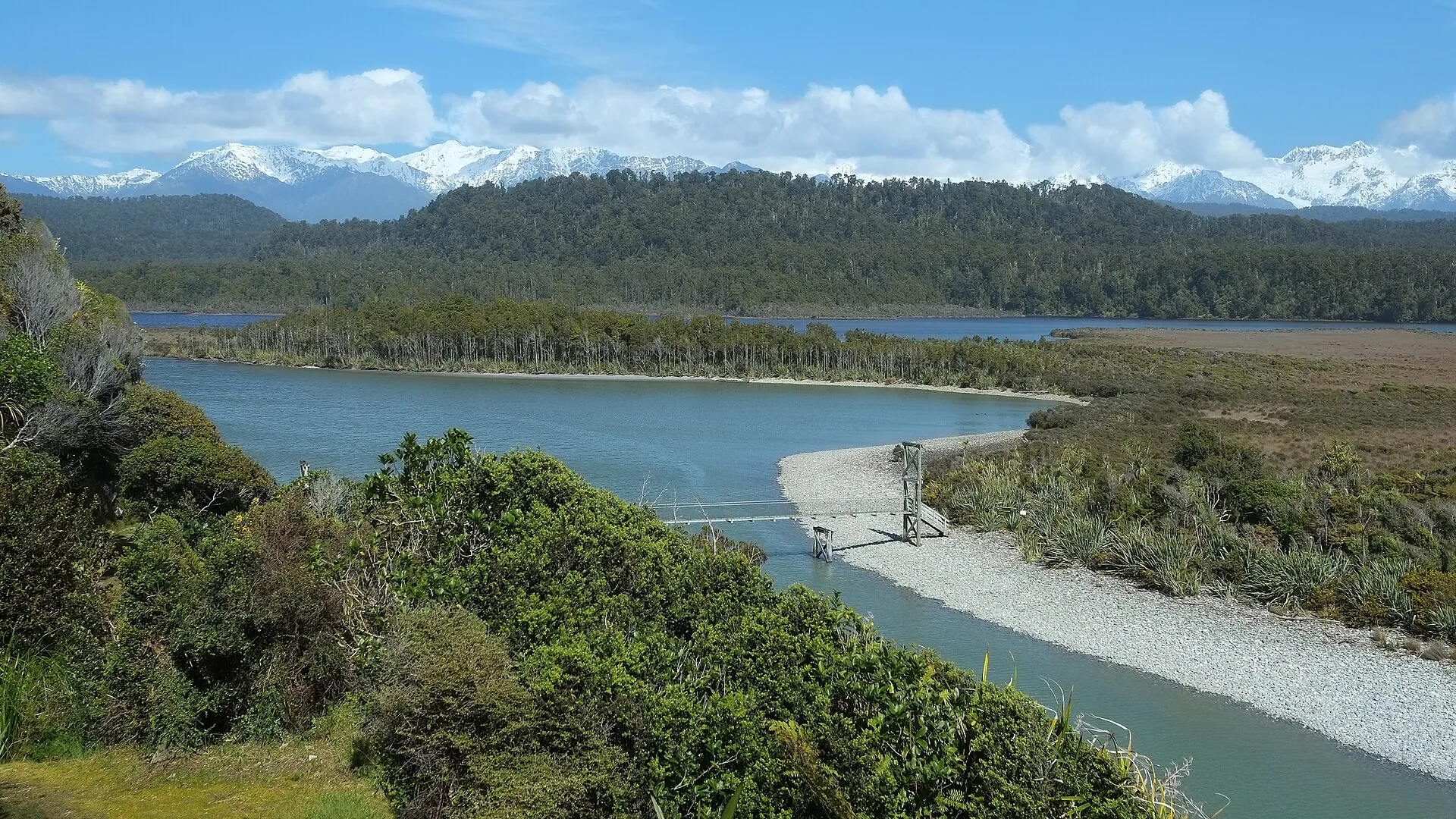
- Lagoon: at more than 3,000 hectares, Ōkārito Lagoon is New Zealand's largest unmodified coastal wetland. Explore it with Ōkārito Kayaks (guided or rental) or on a small-group boat with Ōkārito Boat Eco Tours. Kōtuku (white heron) and royal spoonbills feed here.
- Walks: the Ōkārito Trig (1 h 30 min return) has one of the great views of the Southern Alps. The Three Mile Pack Track (3 h 30 min loop) returns along the beach at low tide.
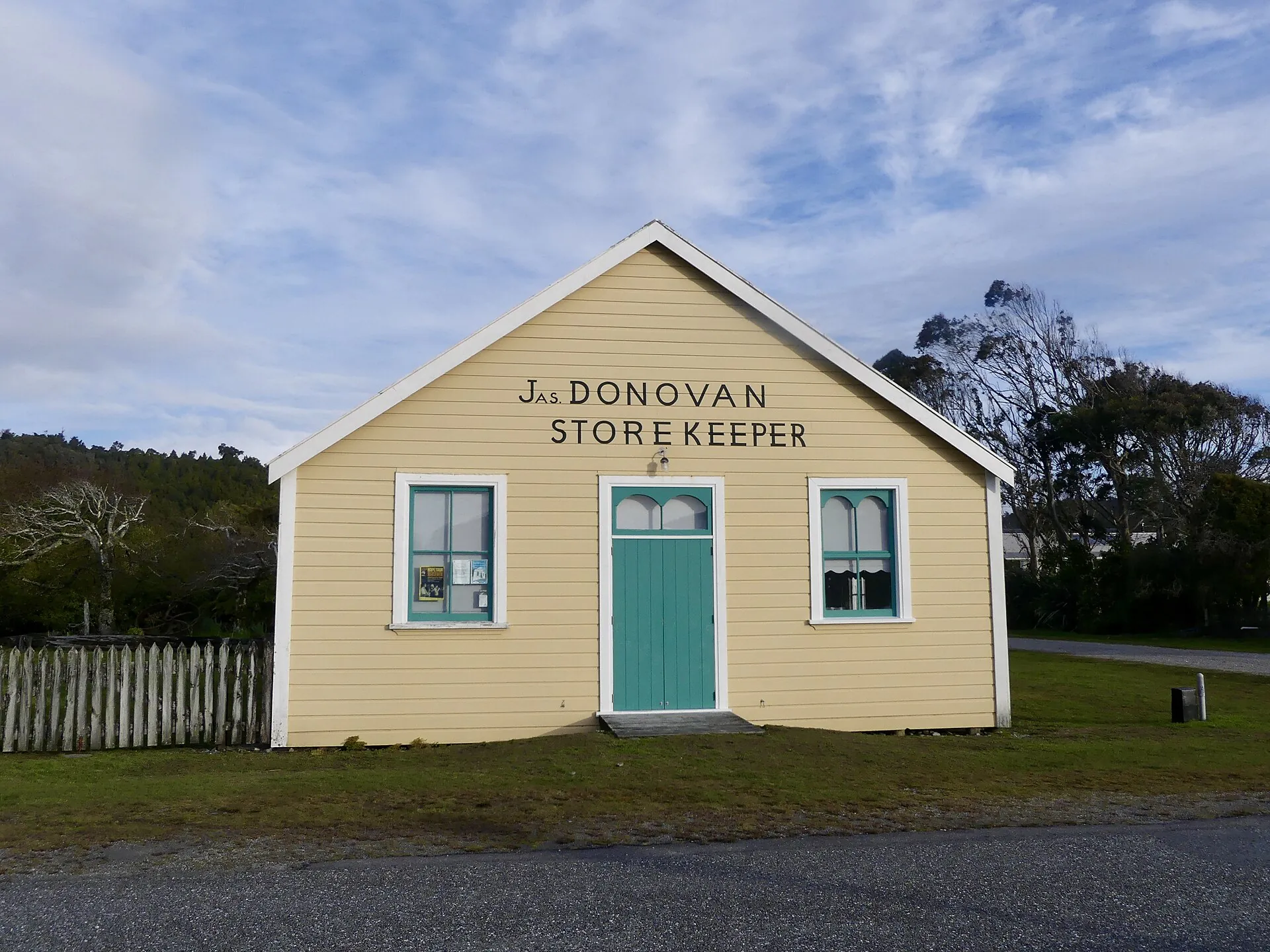
- History: a gold-rush town of 1,500+ in 1866, now home to Donovan's Store, the oldest known building on the West Coast.
Why go to Ōkārito
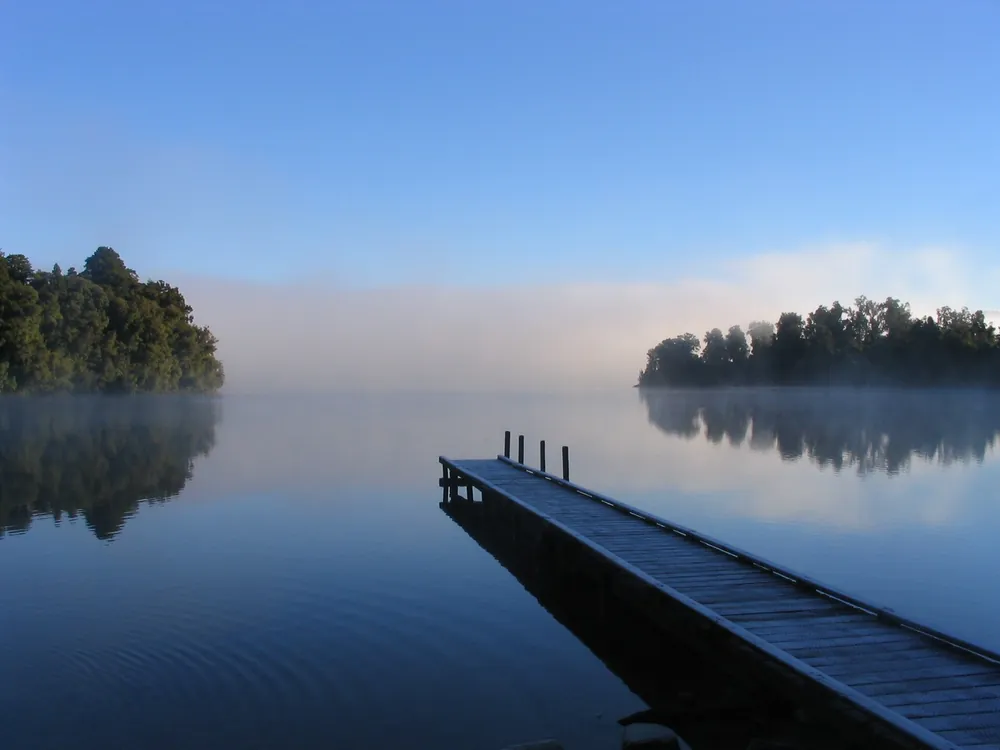
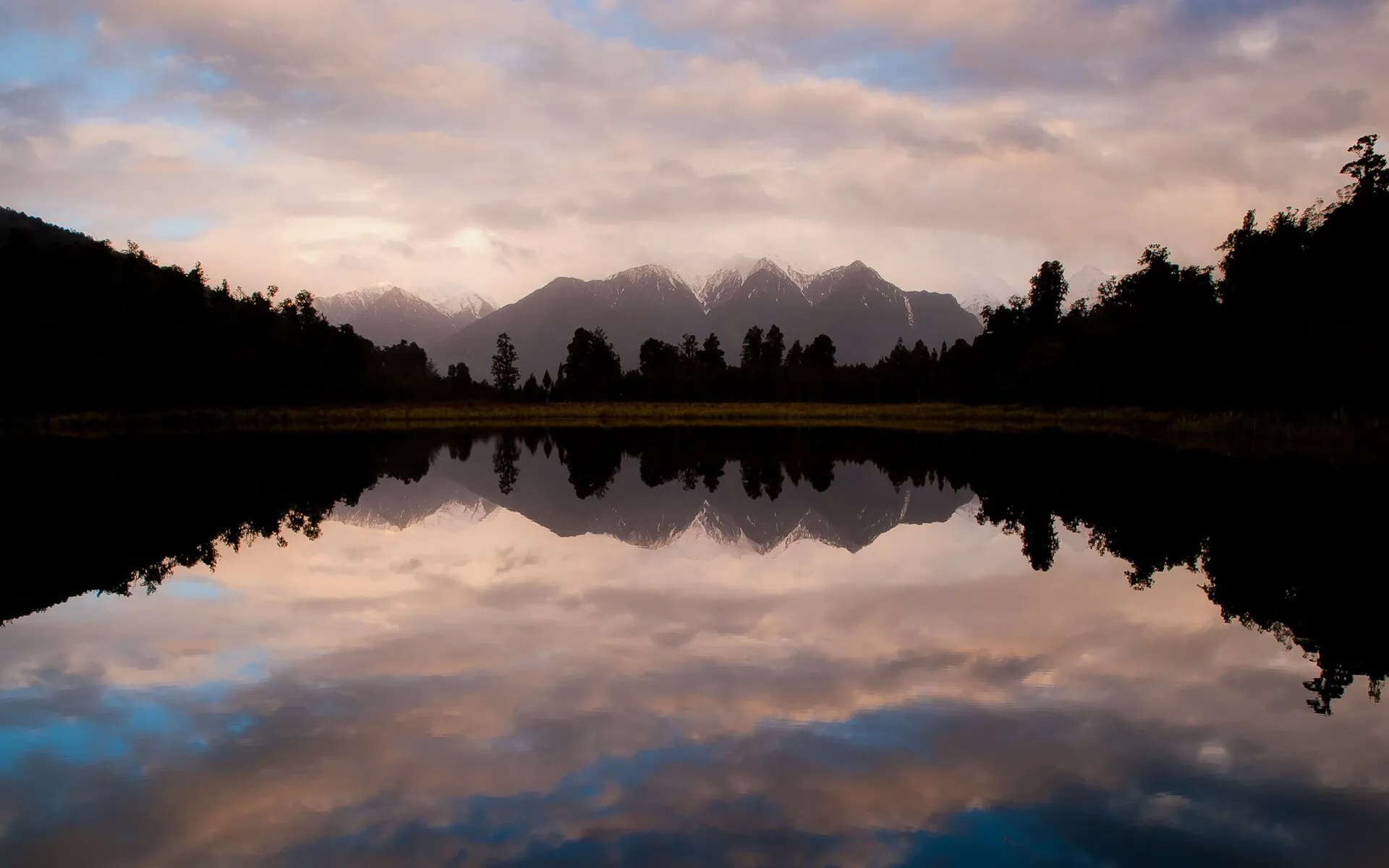
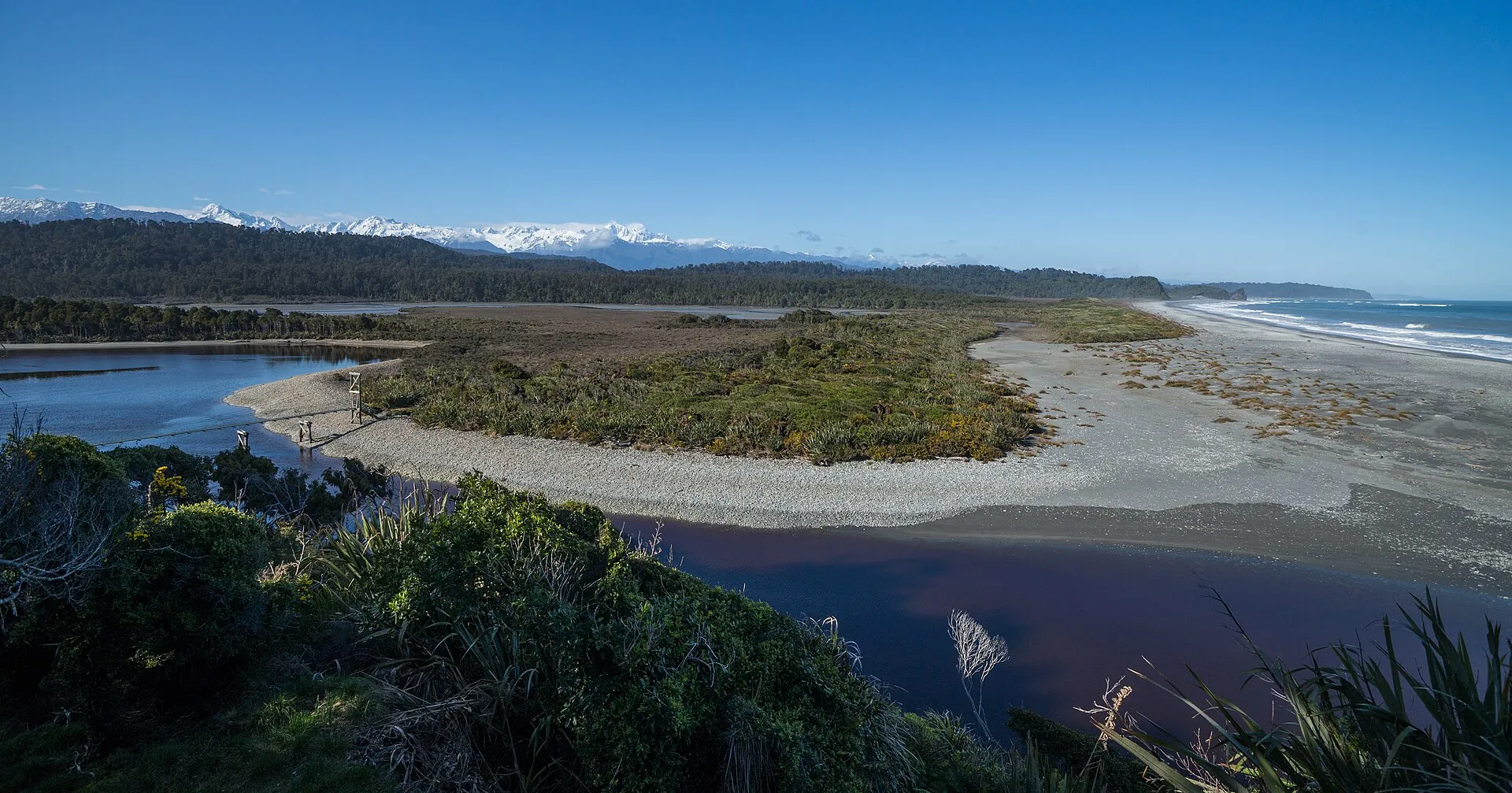
If Franz Josef is about ice and helicopters, Ōkārito is about silence. The village is a scatter of cottages, a school house and a campground on a sand spit between the Tasman Sea and a vast tidal lagoon. Behind it, kahikatea and rimu forest rises towards Aoraki/Mount Cook and Mount Tasman. On a calm morning the lagoon reflects the whole range. It is where the late Booker Prize winner Keri Hulme lived and wrote, and where the photographer Andris Apse made some of his best-known images.
The name comes from ō (place of) and kārito, the young shoots of raupō (bulrush), a valued food. Another account links it to a rangatira named Kārito, whose daughters Mapourika and Wahapako gave their names to the nearby lakes. Māori occupation and seasonal harvesting here began more than 600 years ago, and there was a pā at Ōkārito. Gold was found here in late 1865, and by early 1866 the population had passed 1,500; within a couple of years most had gone. The Ōkārito Memorial Obelisk commemorates the 1860 purchase of Westland from local Māori and the passing of Abel Tasman (1642) and James Cook (1770).
- From Franz Josef
- 28 km, ≈ 25–30 min (15 km SH6 + 13 km sealed road)
- Lagoon
- 3,000+ ha, NZ's largest unmodified coastal wetland
- Residents
- ≈ 30
- Services
- No shop or fuel: bring supplies from Franz Josef or Whataroa
Kiwi spotting: the rowi
The rowi or Ōkārito brown kiwi is the rarest of the five kiwi species, found naturally only in the lowland forest of the Ōkārito sanctuary. Its recovery is one of New Zealand's conservation success stories: eggs are lifted from the wild and hatched at the West Coast Wildlife Centre in Franz Josef, and the chicks are released back into predator-controlled forest. Some of them now live in the forest around Lake Matheson too.
To see one in the wild, Ōkārito Kiwi Tours, run since 2006 by Ian Cooper and his daughter, takes small groups into kiwi habitat from about an hour before sunset. Trips last 3–5 hours and run year-round, with limited places each night. The company says it is the only licensed operator in the South Island taking people to look for wild kiwi, and it reports seeing a kiwi on 89% of trips. You will also hear ruru (morepork) and may see tree wētā. Book direct well ahead, and expect cold, quiet waiting in the dark.
Want a guaranteed sighting? The kiwi house at the West Coast Wildlife Centre in Franz Josef is the reliable alternative.
On the lagoon: kayaks and boat tours
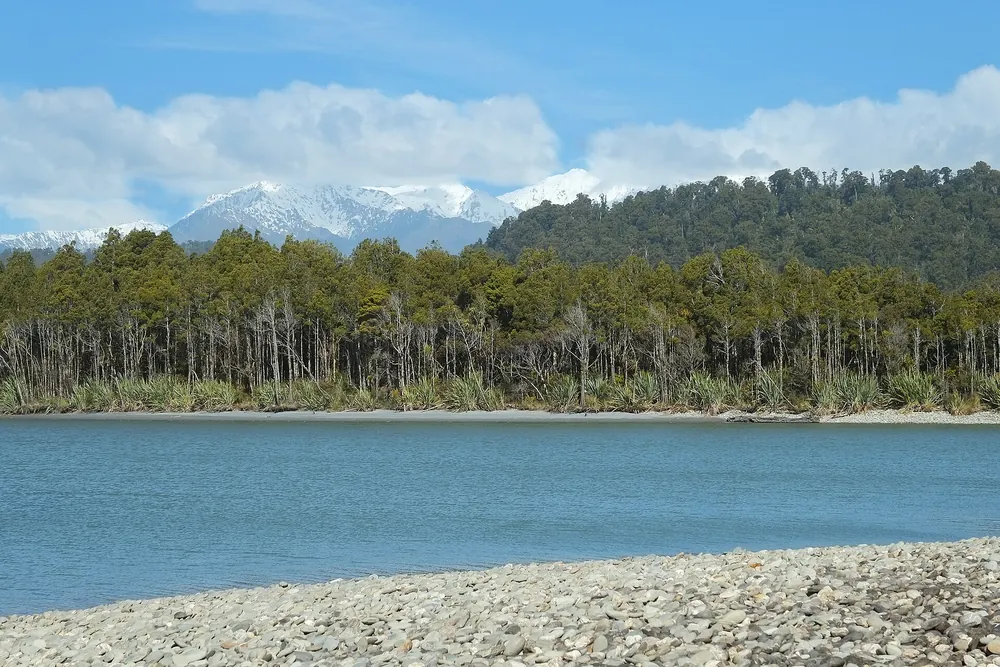
Ōkārito Kayaks has hosted visitors for more than 30 years and won a 2026 NZ Tourism environment award. It offers guided trips and freedom kayak rental on the lagoon and its forest-lined channels, in what it describes as New Zealand's largest predator-free environment. Calm, sheltered water makes it suitable for beginners. Rental and guided prices were listed on its website in November 2026. Go early for the stillest water and the mountain reflections.
Ōkārito Boat Eco Tours (Paula and Swade) runs small-group eco tours on the Explorer Douglas, a boat custom-built for the lagoon. You travel through wetland and ancient kahikatea forest with views of the Southern Alps, glaciers and the ocean. Expect commentary on birds and history: kōtuku (white heron) and royal spoonbills feed here year-round, along with many waders.
On GetYourGuide there is a kayak and walk to the Ōkārito kiwi sanctuary from Franz Josef (4.9 from 74 reviews, November 2026), and Glacier Valley Eco Tours' half-day guided tour to Ōkārito.
Kayak & walk to the Ōkārito kiwi sanctuary
Paddle and walk into the home of the rowi, the rarest kiwi. Rated 4.9 (74 reviews) as of November 2026.
Check availabilityBook via GetYourGuide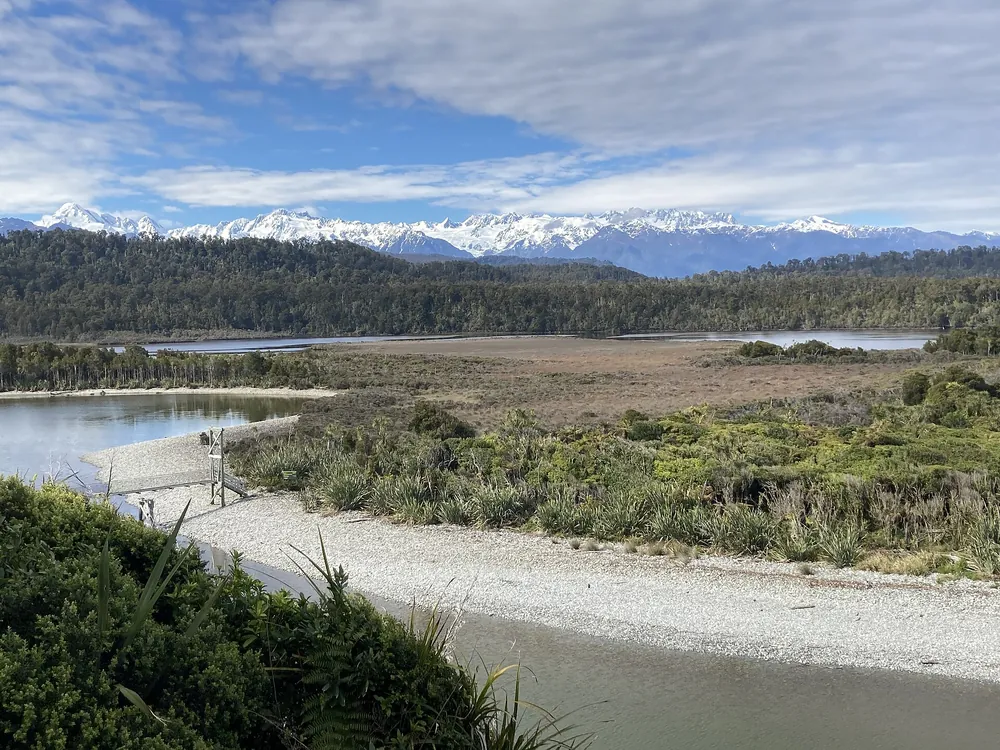
Half-day guided tour to Ōkārito
Glacier Valley Eco Tours' trip to the historic lagoon village of Ōkārito, its wetland and coastal forest. A new listing.
Check availabilityBook via GetYourGuideTour listings are on GetYourGuide. Prices, times and cancellation terms are shown live on each listing and can change (glacier flights depend on the weather); FranzJosef.com may earn a commission at no extra cost to you.
Walks at Ōkārito
Both main walks start at the car park beside the Ōkārito School House on The Strand.
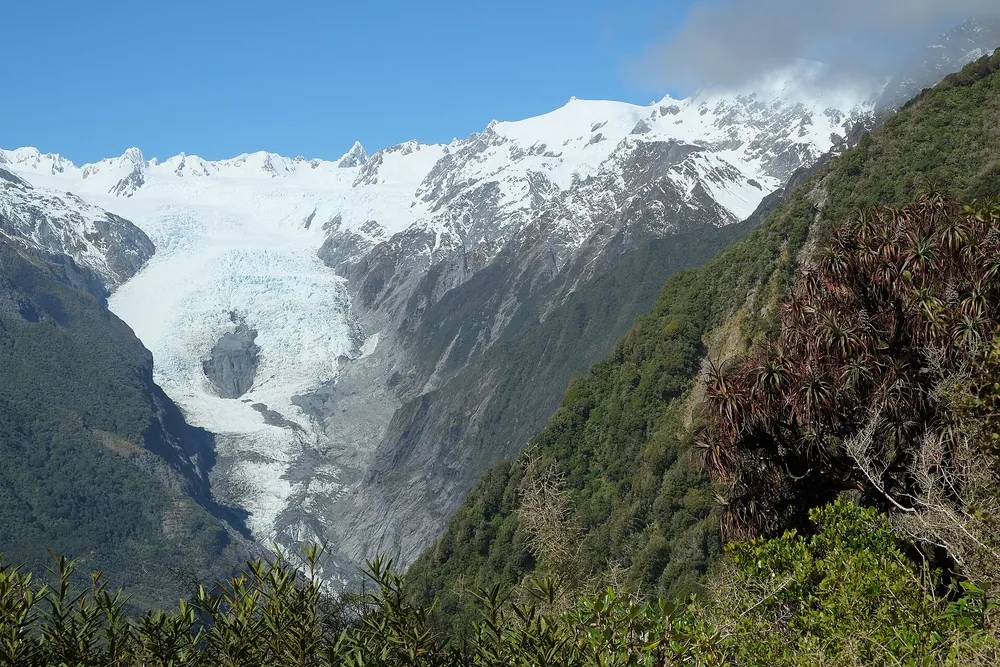
- Ōkārito Trig Walk (4.2 km, 1 h 30 min return, easy to intermediate). It follows the wetland walk and pack track for 10–15 minutes, then branches left and climbs gently to the trig. On a clear day the view runs from the snow-capped Southern Alps over forest to the lagoon and beaches, the same "full frontal" that explorers Julius von Haast, Gerhard Mueller and Charlie Douglas surveyed from here.
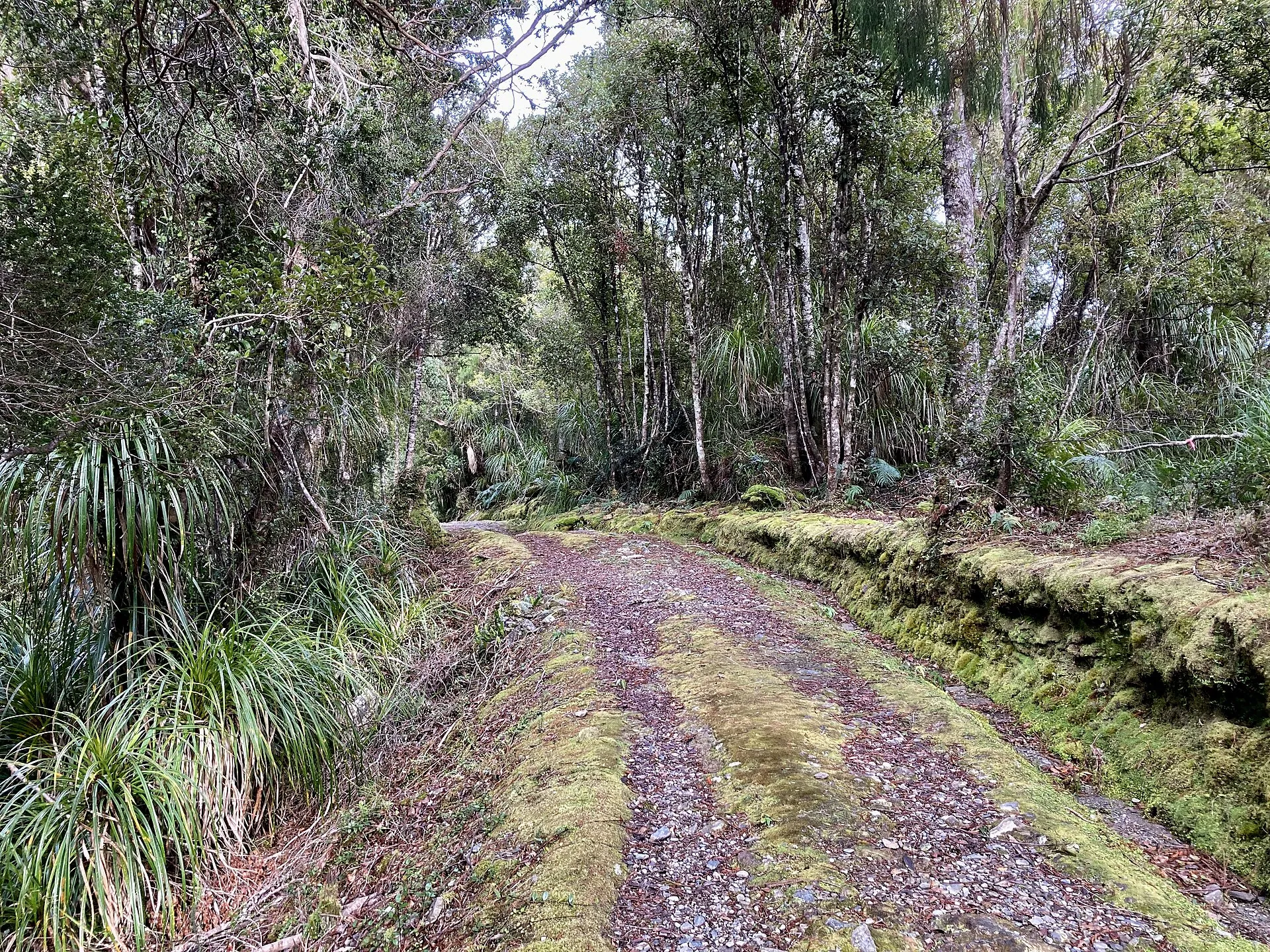
- Three Mile Pack Track / Ōkārito Coastal Walk (9.8 km loop, 3 h 30 min). Through coastal forest and over Kohuamarua Bluff, among wind-shorn rimu, rātā and silver pine, down to Three Mile Lagoon. Return the same way, or along the beach only within an hour either side of low tide (allow 1 h 20 min on the beach). Tide times are posted at the car park.
- Ōkārito Wetland Walk: a short, easy walk through the wetland at the edge of the village.
Kōtuku: the white herons of Whataroa
The kōtuku feeding on Ōkārito Lagoon breed a little further north, in the Waitangiroto Nature Reserve near Whataroa, the only kōtuku nesting colony in New Zealand. Access is by permit only. White Heron Sanctuary Tours, based in Whataroa 30 km north of Franz Josef, holds the DOC concession and runs guided trips of about 2.5 hours during the breeding season, roughly mid-September to late February or early March. Book direct.
Practical tips
- Supplies: there is no shop or fuel in Ōkārito. Bring food and water.
- Sandflies: repellent is essential by the lagoon.
- Stay: Ōkārito itself has a small campground and a handful of holiday homes and B&Bs. Between Franz Josef and Ōkārito, Wahapo Forest Lodge near Lake Wahapo shortens the drive home after a night kiwi tour. Most visitors stay in Franz Josef.
- Respect the residents: it is a tiny village. Drive slowly, park in the marked areas and keep noise down at night.
- Combine: Ōkārito pairs with a morning glacier flight, or with Lake Mapourika on the way back (see activities).
Frequently asked questions
How far is Ōkārito from Franz Josef?
About 28 km: 15 km north on SH6, then 13 km on a sealed road. Allow 25–30 minutes.
Can you see wild kiwi at Ōkārito?
Yes, on a guided night tour with Ōkārito Kiwi Tours, which reports an 89% success rate. The rowi lives naturally only in the Ōkārito forest.
Can I kayak at Ōkārito?
Yes. Ōkārito Kayaks offers guided trips and freedom rentals on the lagoon, New Zealand's largest unmodified coastal wetland.
What is the best walk at Ōkārito?
The Ōkārito Trig Walk (1 h 30 min return) for the view of the Southern Alps and lagoon; the Three Mile Pack Track (3 h 30 min loop) for a longer coastal walk, timed with low tide.
Where can I see white herons?
Kōtuku feed on Ōkārito Lagoon, and nest at the Waitangiroto reserve near Whataroa, which you can visit only with White Heron Sanctuary Tours (about mid-September to early March).
Sources and official information
Facts were checked against these official sources in November 2026. Opening hours, prices and timetables change, so confirm before you go.
- okaritokiwitours.co.nz
- okarito.co.nz
- okaritoboattours.co.nz
- glaciercountry.co.nz
- glaciercountry.co.nz
- doc.govt.nz
- en.wikipedia.org
- newzealand.com
FranzJosef.com is an independent guide, not the official site of any glacier operator, the Department of Conservation or the Westland District Council. Some links are affiliate links: tours go to GetYourGuide and hotels go to Booking.com, and we may earn a commission at no extra cost to you.